
Trump Slaps 50% Tariff on Indian Goods Over Russian Oil Trade

Web desk
Published on Aug 07, 2025, 11:26 AM | 4 min read
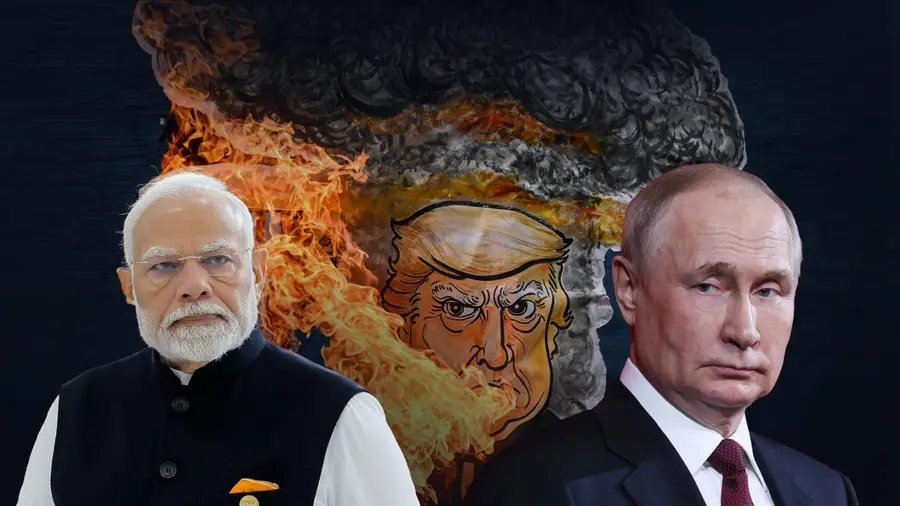
New York / New Delhi: In a sweeping escalation of trade tensions, former US President Donald Trump has announced a 50 per cent tariff on Indian goods, citing “reciprocity” and penalising India’s continued energy trade with Russia. The move, which came via an executive order titled Further Modifying the Reciprocal Tariff Rates, slaps a base 25 per cent duty on all Indian imports starting August 7, with an additional 25 per cent surcharge targeting India’s oil trade with Russia set to take effect on August 27.
India now faces the highest cumulative tariff rate among nearly 70 countries listed under the order, surpassing Japan (15%), the UK (10%), Sri Lanka (20%), Pakistan (19%), and Myanmar and Laos (40%). The decision effectively isolates India in the current tariff regime and positions it among the most heavily penalised economies under Trump’s trade blueprint.
India, which in recent years deepened its alignment with Trump -era America both diplomatically and commercially, appears caught off guard. Once celebrated by India for symbolic gestures and personal bonhomie between Trump and Prime Minister Narendra Modi, Washington’s sharp economic retaliation has exposed the fragility of that rapport.
In an emotional speech following the announcement, Modi vowed to protect India’s farmers, livestock rearers, and fishermen “at any cost.” He declared, “I know personally that I will have to pay a heavy price for this, but I am prepared for it.” But behind the nationalistic rhetoric lies a more complex reality: the Indian government is navigating not just diplomatic blowback, but mounting domestic pressures including inflation, global scrutiny, and economic dependence on corporate giants.
The root of the US action lies in India’s continued purchase of discounted Russian oil, which the US views as defiance of Western sanctions and a disruption of global energy discipline. Indian private refiners, particularly corporate giants like Reliance and Adani, have profited heavily by buying Russian crude and re-exporting refined products. Cutting off this oil flow would raise domestic fuel prices and dent refinery margins, an outcome the Indian government appears keen to avoid.
While Modi’s speech positioned his administration as defending rural India, insiders acknowledge that the narrative of “protecting farmers” is largely political cover. In reality, New Delhi’s trade and energy calculus is tightly interwoven with the profit motives of a few dominant conglomerates. The Ministry of External Affairs called the US tariffs “unfair, unjustified, and unreasonable,” but critics argue that the “national interest” being invoked increasingly mirrors the interest of India’s billionaires.
Indian- American voices have also warned of the move’s broader fallout. Ajay Bhutoria, a former Biden advisor, noted that India supplies nearly half of America’s generic drugs, and warned that these tariffs will spike prescription prices. Everyday essentials like lentils, spices, and festive clothing are expected to see a 30 to 40 per cent price hike in US markets. Meanwhile, diaspora group Indiaspora stressed the need for diplomatic resolution, calling the US- India relationship “essential” but admitting the current strain.
Trump’s announcement came with his characteristic flourish on Truth Social: “It’s Midnight!!! Billions of Dollars In Tariffs Are Now Flowing Into The United States Of America!” He later posted, “Billions of dollars, largely from countries that have taken advantage of the United States for many years, laughing all the way, will start flowing into the USA.”
However, the broader impact could be far less theatrical, triggering inflationary pressures globally, deepening economic inequality, and heightening tensions between major economies.
The fallout also underscores a deeper contradiction in global trade: while countries like India are encouraged to embrace market openness and liberalisation, they are simultaneously punished for pursuing self- interest in energy security or maintaining domestic protections. The current standoff also reflects the structural imbalance in Western- led global trade, where emerging economies are often forced into compliance with the economic strategies of larger powers.
India’s trade negotiations with the US had already stalled over issues like agriculture, dairy access, GM crops, and subsidies. Washington’s long-standing frustration with India’s protective agricultural policies has now returned to centre stage. But with no clear resolution in sight, the Indian government finds itself juggling populist posturing at home with strategic compromise abroad.
In the end, India’s decision to tie its economic and diplomatic trajectory to Trump -era priorities now appears to have backfired. The Modi government’s overt alignment with Trump may have secured photo-ops and short- term deals, but the current tariff shock reveals the long-term cost of that gamble.













0 comments