
International - Reporting
Corruption Underwater: The True Disaster Behind the Floods

Anusha Paul
Published on Sep 25, 2025, 06:08 PM | 7 min read
Manila: The Philippines, one of the most vulnerable and disaster-prone countries in the world, was hit by the strongest cyclone of the year on September 23. At least three people have died, and tens of thousands have been displaced due to flooding and landslides—conditions already worsened by failed infrastructure projects and systemic corruption.
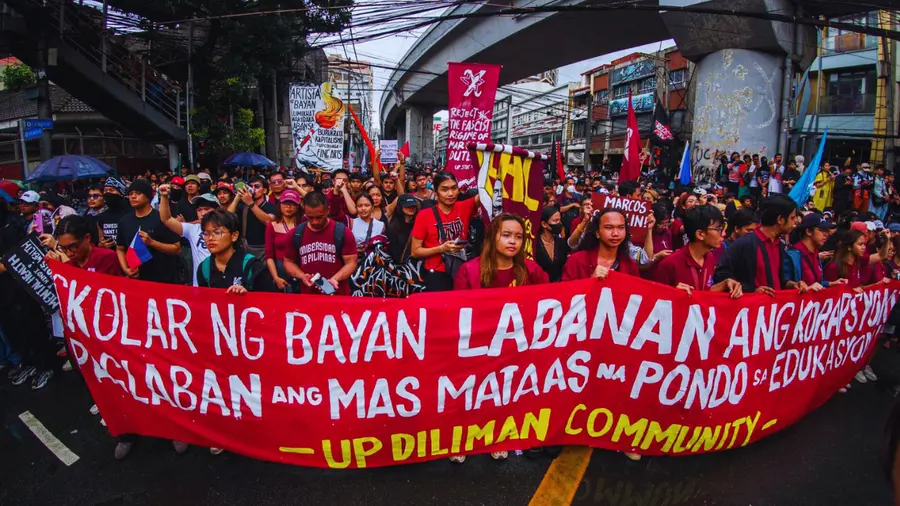
Just two days earlier, on September 21—the anniversary of former President Ferdinand Marcos Sr.’s declaration of Martial Law—a cyclone had already begun battering the country. At the same time, more than one hundred thousand Filipinos took to the streets in one of the largest protests seen in recent years.
Protesters gathered at symbolic sites across Metro Manila—Luneta Park, Rizal Park, and the EDSA People Power Monument—calling for accountability, justice, and systemic reform.
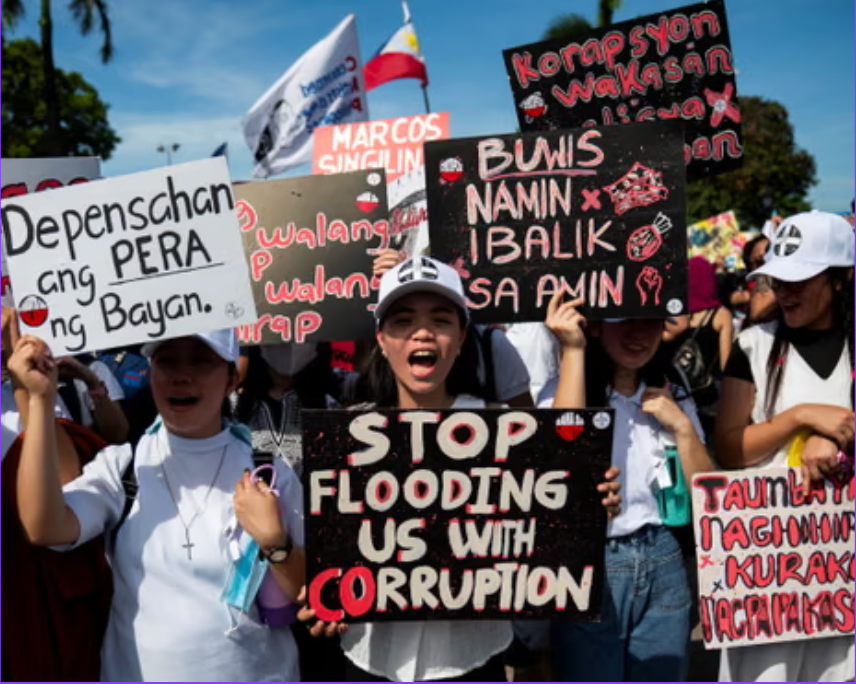
The mobilisations were led by various civil society organisations, including BAYAN, student groups, labour unions, and religious communities. Protesters carried placards reading “No more” and “Jail them,” while many wore white ribbons to symbolize resistance to corruption.
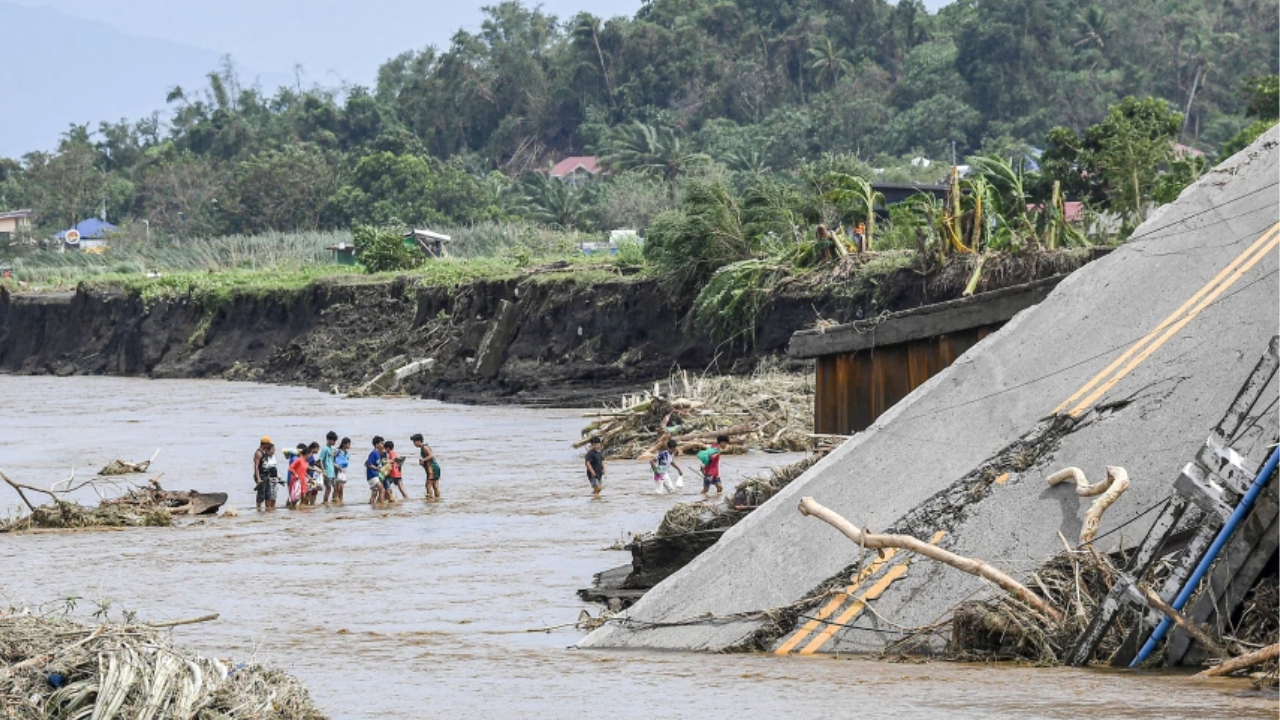 Image courtesy: Getty
Over 200 people were detained, including 90 minors. Several were injured during confrontations. Authorities reported 93 officers injured after some protesters, described by police as masked and militant, allegedly hurled stones and makeshift incendiaries. In response, riot police deployed tear gas and water cannons.
Some of the fiercest clashes occurred after the official program had ended, particularly near Mendiola, where unidentified masked groups reportedly engaged in skirmishes with police.
Sarah Raymundo, National Executive Member of BAYAN, which organized the protest said, “They were already present at the Luneta rally and marched with scores of activists to Mendiola. It’s the first time we encountered them. We have never seen them joining our protest actions before.”
“We are still gathering information about this group. What is clear among us is that we condemn the brutality inflicted upon some of them. We may not be in favor of their methods at that point of our protest against corruption, but we understand the deep surge of anger coming from people—especially the urban poor—who engaged in fierce battle with the police after our program in Mendiola was over.”
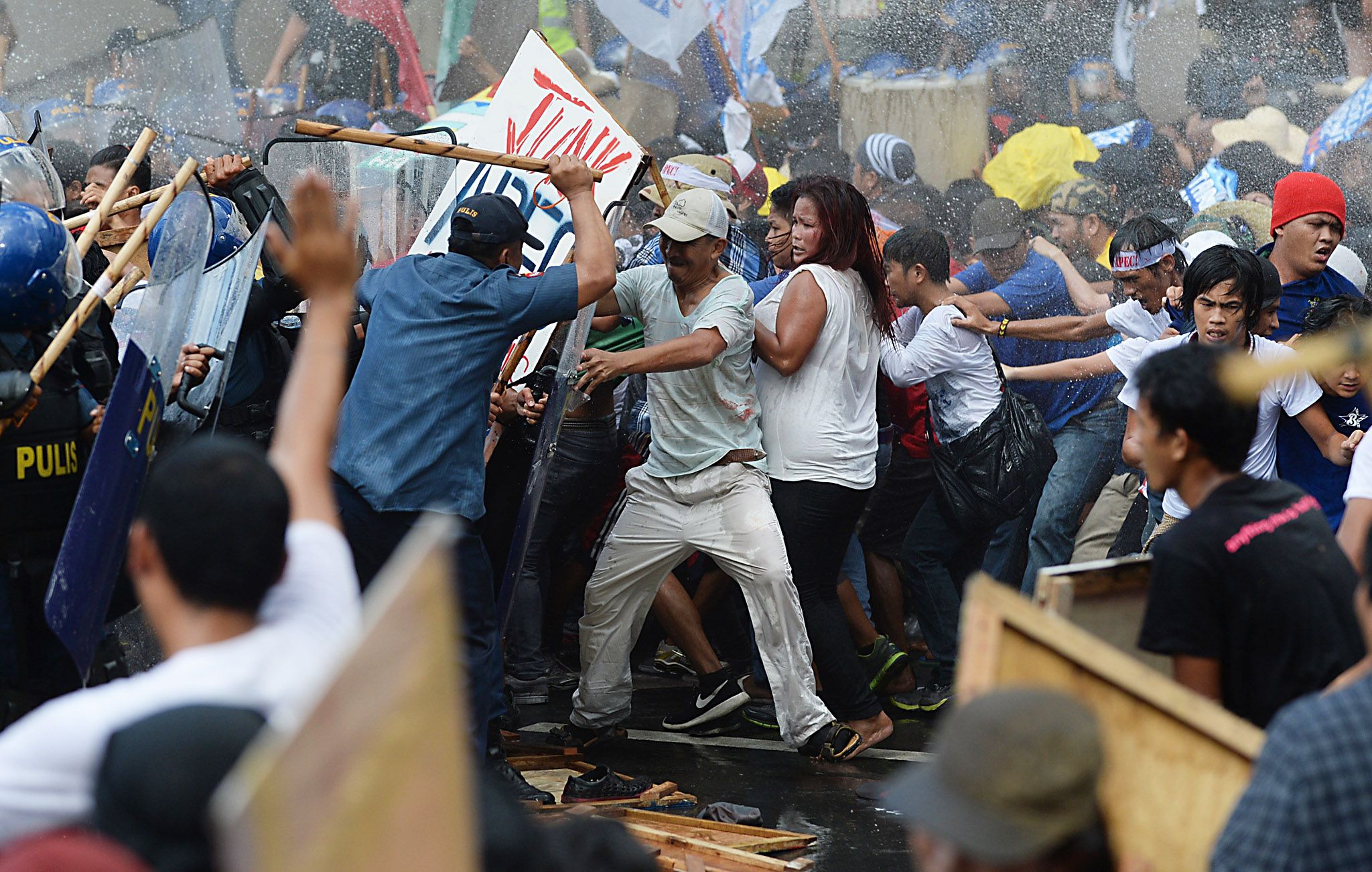 Image Courtesy: Financial Times
Raymundo further condemned the police response:
“We condemn the brutal dispersal, assaults, and arbitrary arrests carried out by police against protesting youth in Ayala Bridge and Mendiola. We are still gathering data, but the latest count shows 131 people arrested, including minors. Twelve of our comrades were among those detained. Many others were injured and had to be brought to hospitals.”
She also raised concerns about possible casualties:
“We are still confirming reports of deaths among those brutalized by police. One particularly disturbing video shows a young male protester, possibly a teenager, already very weak, being carried by the police. He was dropped during the process, and his head hit the pavement. Since then, we have been unable to get an update on his condition.”
“The police brought young people to precincts and have barred access to family members and lawyers. It’s horrifying. We demand the immediate release of all those arrested and call on the authorities to respect basic human rights.”
The spark for the protests was the fact that thousands of flood-control projects—collectively worth over ₱545 billion (approximately US$9.5 billion)—were either not constructed or completed using substandard materials.
 Picture Courtesy: Reuters
The Department of Public Works and Highways (DPWH) had approved over 9,800 projects under the Marcos Jr. administration since 2022, including drainage systems, flood barriers, and river channelling initiatives. Many of these are now under formal investigation.
Public outrage reached boiling point following a televised Senate inquiry, where Sarah and Pacifico Discaya, owners of multiple construction firms, admitted to paying bribes and kickbacks to secure public contracts. Their confession implicated at least 17 members of the House of Representatives and several senior DPWH officials, exposing a systemic scheme of collusion and extortion.
Adding insult to injury, the couple flaunted a fleet of luxury vehicles—one reportedly worth ₱42 million—during a media interview, further fuelling public fury.
“This is not an isolated corruption case,” said Raymundo. “It’s part of a broader scandal that recent investigations have exposed—showing that billions of pesos were embezzled from government flood-control projects at a time when millions of Filipinos are suffering from catastrophic flooding and back-to-back typhoons.”
She added:
“These aren’t just scandals—they’re symptoms of a broken system. What we’re seeing now with the flood-control projects is a repeat of the same old story. And the people are right to be furious.”
Raymundo pointed to historical precedents to contextualise the scale of corruption:
“We have seen this before. Think about the pork barrel scam,” she said, referencing the 2013 Priority Development Assistance Fund (PDAF) scandal. “That led to the Million People March—one of the largest public outcries against graft in recent memory. People were angry because they knew that systemic corruption was costing them public services, development, and even lives.”
“Let’s not forget 2001. President Joseph Estrada was forced out of office during EDSA II, after being accused of plunder involving over ₱4 billion in illicit wealth. That entire episode—from the aborted impeachment trial to the street protests—was driven by the public’s demand for real accountability and transparency.”
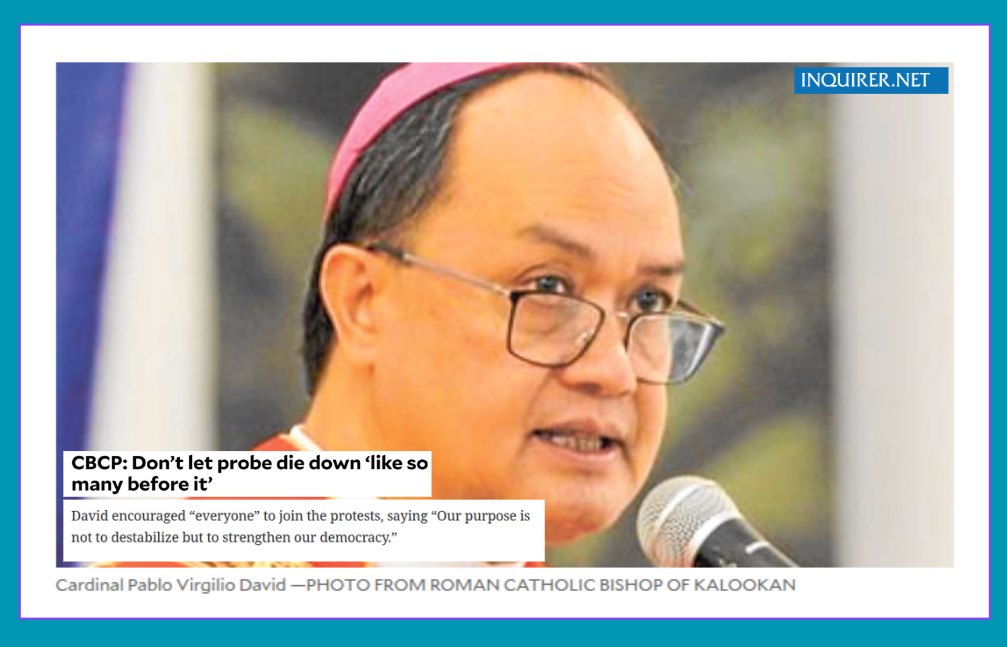
In the wake of the scandal, Senate President Francis Escudero, House Speaker Martin Romualdez, and DPWH Secretary Vince Dizon all stepped down amid growing pressure. At least three engineers have been dismissed, and 15 more are under investigation, with asset freezes already initiated on multiple accounts and properties.
While liberal reformist groups have called for greater transparency and institutional oversight, activists like Raymundo argue that these demands do not go far enough—and often serve to defuse more radical public anger.
“To protect Marcos Jr. at this point while being critical of the corruption scandal isn't just a political stance; it's the clear expression of a deeply embedded, pro-U.S. imperialist ideology—a mindset that, while often framed as 'liberal' or 'social democratic,' betrays a truly fascist drive to protect leaders who surrender national sovereignty, economically and politically, to foreign powers,” Raymundo said.
“A succession of these puppet regimes lies at the very heart of what can only be described as bureaucrat capitalism. Within this structure, state corruption isn't a bug; it's a feature. It's the expected condition of a puppet state, where bureaucrats are handsomely rewarded by their imperialist masters for diligently upholding neo-colonial conditions and delivering institutions into foreign hands. Their massive ill-gotten gains are precisely the payment for this service.”
She continued:
“The reformist line is pushed by cynical apologists who preach 'civility' while protecting Marcos Jr. from accountability. Their sanctimonious calls are a cruel charade. They have long been the real architects of stagnation and the saboteurs of true freedom and progress.”
Although BAYAN and other grassroots organizations supported the Trillion People March at People Power Monument, Raymundo noted that civil society is not monolithic:
“Some leaders from this group co-organised that march, which we supported with our mass leaders and activists after the Luneta rally, because we know most Filipinos at that protest seek genuine accountability—not to shield Marcos Jr. Sadly, some in this civil society faction now side with Marcos Jr. and distort calls for systemic change as incitement to unrest.”
The protest date—September 21—was deliberately chosen. It marks the anniversary of the declaration of Martial Law in 1972 by former President Ferdinand Marcos Sr. Protest leaders said the date was intended to underscore the cyclical nature of power abuse in the Philippines and to demand accountability across all branches of government.
Foreign diplomatic missions, including those of the United States and Australia, issued advisories for their citizens to avoid protest areas due to security concerns. Security forces remain on high alert, with major roads and government buildings under heavy guard.
Even after BAYAN and student groups peacefully concluded their program in Mendiola, violence continued on the streets.
“In the streets, it was the urban poor—the frontline casualties of state corruption—who were met with the harshest repression,” Raymundo said. “This is no time to dismiss or silence these long-suffering victims of a rotten system. The ranks of the unrepresented, the silenced, and the fallen remain tragically vast. What happened on September 21 is a bracing call to deepen our collective commitment to justice and systemic change.”



Related News
Dont Miss it





0 comments