
London Hosts First Ever Anti Caste Film Festival
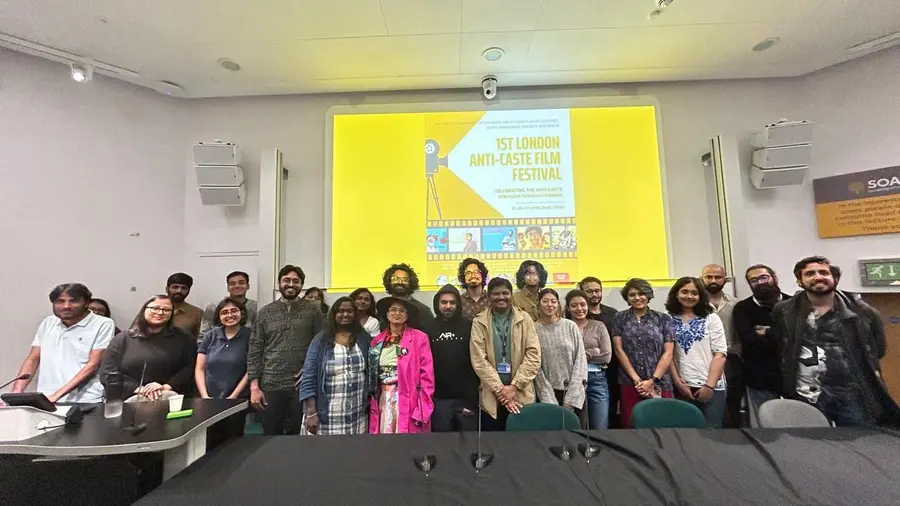
Organisers of Anti -Caste Film Festival held in London

Web desk
Published on May 06, 2025, 12:30 PM | 3 min read
London: In a landmark cultural and political event, the first-ever Anti -Caste Film Festival was held in London from April 26 to 28, drawing students, activists, and members of the South Asian diaspora for a powerful showcase of Dalit resistance and cinematic expression.
Jointly organised by the Students’ Federation of India (SFI) – UK, SOAS Ambedkar Society, South Asia Institute, and Indian Labour Solidarity (ILS), the festival brought anti-caste narratives to the fore at the heart of the former imperial metropole. The event featured a curated selection of films that explored the historical and contemporary experiences of Dalit communities.
Films such as Dr. B R Ambedkar (dir. Jabbar Patel), Jai Bhim Comrade (dir. Anand Patwardhan), Court (dir. Chaitanya Tamhane), Fandry (dir. Nagraj Manjule), and Kaala (dir. Pa Ranjith) were screened to packed audiences, followed by critical discussions on caste, resistance, structural violence, and diasporic solidarity.
The festival opened with Dr. B R Ambedkar, chronicling the life and legacy of Babasaheb Ambedkar from 1901 to 1956. Day two featured Jai Bhim Comrade, Anand Patwardhan’s 14- year documentary project exploring Dalit protest music and the tragic story of Vilas Ghogre, a Dalit Marxist poet who took his life after a police atrocity in 1997. The final day offered a full-day screening including Court, a stark look into the Indian judiciary’s systemic bias, and Fandry, which follows a young boy’s coming- of -age in the face of caste humiliation in rural Maharashtra.
The event comes at a time of increasing censorship and violence against marginalised communities in India. Films like Phule, which portray the lives of social reformers Jyotirao and Savitribai Phule, are facing bans, making this festival a timely act of resistance and international solidarity.
Each screening was followed by vibrant discussions focusing on the gaze of Dalit filmmakers and the need to decenter the Savarna (upper caste) lens in Indian cinema. Attendees noted how these films go beyond portraying Dalits as victims, instead capturing the quiet dignity and complexity of their lived experiences.
“Our initial intention was rooted in the desire to create a vital platform for narratives often overlooked or actively suppressed ,” said Abhishek Bhosale, President of the SOAS Ambedkar Society. “ We hoped to harness the evocative power of cinema to illuminate the lived realities of caste discrimination. The conversations this festival sparked will, we believe, ripple outward — contributing to the global effort to dismantle caste-based oppression .”
The SFI UK reaffirmed its commitment to the anti-caste struggle, stating that the festival was not only a celebration of art but a political act aimed at confronting dominant narratives and fostering global solidarity. Organisers emphasised the ongoing need to amplify marginalised voices and continue the fight for an egalitarian society.



Related News
Dont Miss it







0 comments