
Syria
Israeli Airstrikes Escalate Tensions in Syria as Sectarian Conflict Intensifies in Suweida
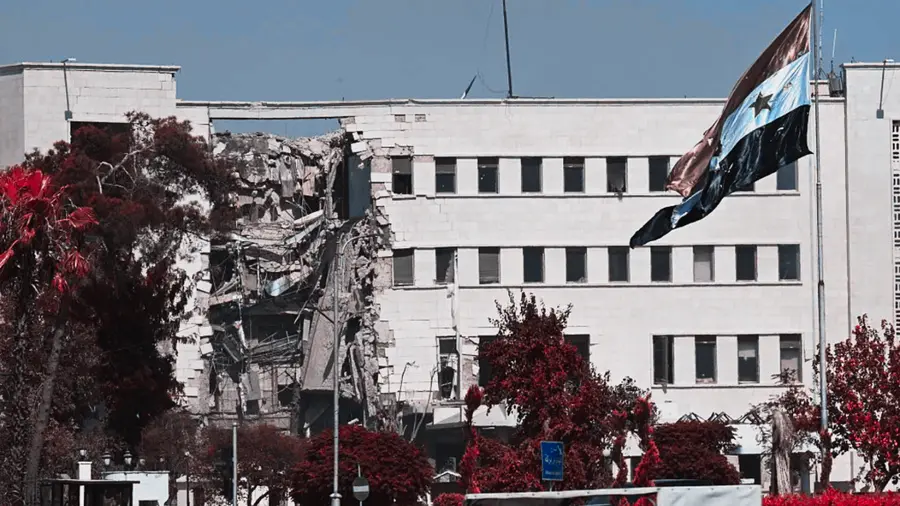
Image courtesy: BBC

Web desk
Published on Jul 17, 2025, 03:08 PM | 4 min read
Damascus: In a major escalation of regional conflict, Israeli warplanes launched a wave of coordinated airstrikes on the Syrian capital Damascus and the southern governorates of Suweida and Daraa on Wednesday. The attacks reportedly targeted the Syrian Ministry of Defense, central military headquarters, and an area near the presidential palace. Less than an hour later, additional strikes hit Syrian army positions in Daraa province.
The latest round of Israeli aggression came just hours after reports suggested that Tel Aviv had agreed to a U.S. request to halt attacks on Syrian territory—raising questions about the sudden reversal and Israel’s broader strategic objectives. Early Wednesday morning, Israeli jets resumed bombardments over Suweida, striking multiple locations across the Druze-majority province where fierce sectarian clashes have erupted in recent days.
According to the Syrian Observatory for Human Rights, nearly 170 people were killed between Sunday and Tuesday in clashes between Druze armed groups and Sunni Bedouin tribes. The violence was reportedly triggered by tit-for-tat kidnappings and retaliatory attacks between the two communities—many of whom have long histories of rivalry and competition over land, resources, and local governance.
On Monday, the Syrian Ministry of Defense announced it had dispatched security reinforcements to stabilize the situation in Suweida. However, those efforts were interrupted when Israeli jets targeted Syrian army tanks before they could reach the front-lines. Israeli Defense Minister Israel Katz stated that the strikes were “a clear warning to the Syrian regime” not to harm the Druze community. The Israeli Occupation Forces (IOF) further justified the airstrikes by claiming that the Syrian military presence near the Israeli border “may pose a threat to the State of Israel.”
This is not the first time Israel has claimed to act in defense of Syria’s Druze minority. In May, Israeli jets reportedly struck an area near the presidential palace in Damascus, warning the then-new Syrian government against initiating military operations in Druze-populated areas of Rural Damascus and Suweida. Critics, however, argue that Israel is using the Druze issue as a political and military cover to repeatedly violate Syrian sovereignty and exert influence over the country’s internal affairs.
Meanwhile, a fragile ceasefire declared by Syrian Defense Minister Murhaf Abu Qasra on Tuesday appears to be crumbling. In a post on X (formerly Twitter), Abu Qasra announced that government forces would cease offensive actions in Suweida, responding only to direct attacks from “outlaw groups.” Yet, within hours, renewed fighting broke out, as the presence of Syrian troops in key districts sparked local unrest and armed resistance.
The Druze community’s spiritual leader, Sheikh Hikmat al-Hijri, issued a rare public rebuke of the Syrian government, accusing it of coercing the Druze Spiritual Presidency into issuing what he called a “humiliating statement” that endorsed the military deployment. According to al-Hijri, the al‑Sharaa administration—along with unnamed foreign powers—pressured the religious leadership to urge Druze fighters to disarm and welcome government forces into their towns.
In a statement released Wednesday evening, al-Hijri said that while he had initially accepted the compromise to prevent further bloodshed, the government had “broken its promise” and resumed “indiscriminate shelling against civilians.” He warned that the Druze population now faced “a campaign of total extermination” and called for resistance “by all possible means.”
The dual threats of foreign intervention and sectarian fragmentation have placed Syria’s already fragile transition under enormous strain. The interim government, led by President Ahmed al‑Sharaa, is attempting to maintain order while facing rising distrust from both minority communities and former regime loyalists. With U.S. support and Israeli pressure shaping the battlefield, Syria’s southern provinces have become the latest flashpoint in a conflict that no longer fits neatly within the lines of rebellion and counterinsurgency.
What began as a localized tribal dispute has now expanded into a dangerous convergence of sectarian strife, foreign aggression, and internal discontent. As Israeli jets patrol Syrian skies and local leaders call for armed resistance, the road to peace in Suweida—and Syria at large—appears more uncertain than ever.



Related News
Dont Miss it










0 comments