

India Quietly Sends Thousands to Israel’s War Zone Despite Casualties
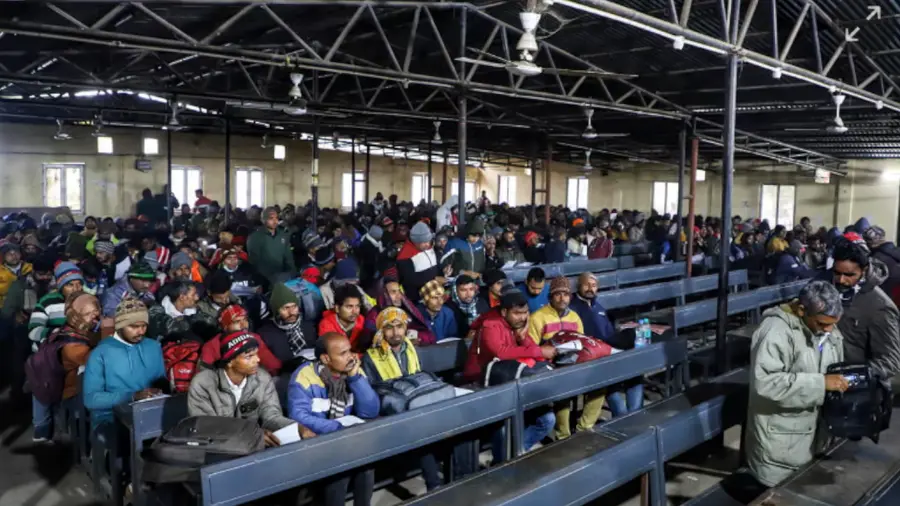
Workers wait to submit registration forms in Uttar Pradesh state. The recruitment drive has been criticised by 10 trade unions who said ‘it has dehumanised and commodified Indian workers’. Photograph: Naeem Ansari/AFP/Getty Images

Web desk
Published on Aug 07, 2025, 05:21 PM | 3 min read
New Delhi: In a stark revelation that underscores both a strategic silence and a human cost, the Government of India has confirmed that over 20,000 Indian nationals have been deployed to Israel for work despite the ongoing Israel-Hamas conflict. This includes 6,774 workers sent under a bilateral framework agreement and an additional 13,400 workers through private recruitment channels.
The data was disclosed in a written reply by the Ministry of External Affairs to a question raised by Dr. John Brittas, MP, in the Rajya Sabha on August 7, 2025.
The statement appears at odds with the Government’s repeated claims of prioritising the safety of its citizens abroad. The Ministry acknowledged that one Indian worker was killed and three others injured in cross-border violence involving rocket attacks from Gaza and Lebanon. Despite this, recruitment and deployment continue, raising serious ethical and legal concerns about the Government's labour export strategy during wartime.
While the bilateral agreement, signed in November 2023, was projected as a model for “safe, orderly, regulated and legal migration,” the Ministry failed to provide any transparency regarding oversight mechanisms for the 13,400 workers recruited via private channels. Alarmingly, the Government has not revealed whether these private recruitments are being monitored for compliance with international safety or labour standards.
Additionally, around 220 Indian workers have already been repatriated from Israel, mainly due to skill mismatches and language barriers, pointing to flaws in the screening and deployment process.
The killing of an Indian agriculture worker in a Lebanese rocket attack in March 2024 and the injuries sustained by three others (including one injured during the infamous October 7, 2023 attack from Gaza) shatter the illusion of safety carefully projected by Indian authorities. The admission stands in sharp contrast to the Government’s assurance that it “accords the highest priority to the safety, security and well-being of Indian nationals abroad.”
Despite these casualties, the response suggests no pause or re-evaluation of the policy. Instead, the official stance highlights routine consular visits and coordination with Israeli authorities, responses that critics argue are cosmetic rather than preventive.
Labour rights activists argue that India's silence on the implications of sending economically vulnerable workers to an active war zone is deeply problematic.
There is also no mention of compensation details for the victims or the families of the deceased, raising further questions about accountability and the true cost of this silent agreement.
The Government’s willingness to continue large-scale deployment of Indian workers to Israel amid ongoing hostilities, injuries, and death amounts to tacit approval of labour export into a conflict zone. With thousands more expected to be recruited, the absence of transparency, regulation, and robust safety measures paints a troubling picture of how economic opportunity is being traded against human risk.



Related News
Dont Miss it










0 comments