
Labour
Air Canada Flight Attendants Strike Over Unpaid Labour and Contract Disputes
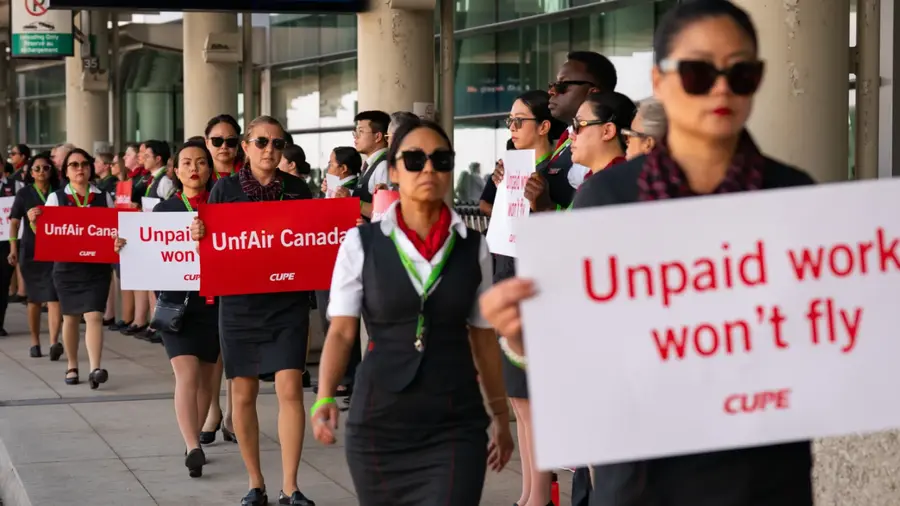
(Image courtesy: Bloomberg)

Web desk
Published on Aug 16, 2025, 05:01 PM | 3 min read
Toronto: More than 10,000 Air Canada flight attendants are on a 72-hour strike since early Saturday morning after exhausting all efforts to reach a fair negotiation with the airlines. The airline responded by suspending the vast majority of its flights, leaving thousands of workers and travellers in a difficult position. The walkout, organised by the Canadian Union of Public Employees (CUPE), began at 1:00 a.m. ET following last-minute contract talks that failed to reach an equitable agreement.
This strike is a clear stand by flight attendants who have long endured unfair treatment, including being uncompensated for critical hours spent working on the ground. These hours, which include essential safety checks, boarding, deplaning, and other customer service duties, remain unpaid despite the heavy responsibilities they carry. Air Canada refuses to acknowledge and compensate this labour and disregard for the workforce that keeps its operations running safely and smoothly.
With over 700 flights operated daily, the airline’s decision to cancel hundreds of flights in response to the strike has caused disruption. The current disruption arises from a breakdown in negotiations between Air Canada and its employees, who have long-standing grievances that remain unresolved.
CUPE has made clear demands: fair compensation for all hours worked, competitive wages that keep pace with inflation, enhanced job security, and improved scheduling practices that respect workers’ health and personal lives. The union rejected the airline’s request for government-imposed binding arbitration, emphasizing the importance of allowing members to vote on any final contract instead of having terms imposed without their consent.
The airline touts a proposed four-year deal with a 38% total compensation increase and other benefits, but CUPE rightly points out that these figures do not keep pace with inflation, nor do they address the core issue of unpaid labour and unsustainable working conditions.
The federal government has so far resisted intervening with back-to-work legislation, opting instead to encourage dialogue. Federal Jobs Minister Patty Hajdu emphasized the importance of a fair deal, stating, “Canadians want a fair deal, but they also need to fly.”
The strike’s immediate effects are felt nationwide: over 300 flights cancelled on day one alone, impacting more than 55,000 travellers. Many passengers received little notice, facing crowded airports and frustrating delays. Air Canada has urged travellers to avoid airports without confirmed bookings, offering refunds and credits, but the disruption highlights the airline’s dependence on the labour force it is currently sidelining.
Air Canada, has taken a hardline approach by locking out its striking workers and preemptively cancelling flights, citing “safety and efficiency” concerns. However, these actions are seen as more as tactics to pressure workers into accepting a contract that undervalues their contributions.
Public opinion polls reveal strong support for the flight attendants’ strike, with nearly 60% of Canadians backing their right to strike despite travel disruptions. Even more — nearly 90% — agree that airline workers should be paid for all hours worked, not just time in the air.
As talks remain at an impasse, CUPE stands ready to return to negotiations immediately — but only if Air Canada commits to bargaining without imposed arbitration, stated union spokes person Hugh Pouliot.



Related News
Dont Miss it










0 comments