

Education
Higher Education in Crisis: Political Interference Threatens India’s Universities

Anusha Paul
Published on Jul 15, 2025, 06:19 PM | 6 min read
Thiruvananthapuram: The ongoing conflict in Kerala over the appointment of Vice-Chancellors (VCs) in state universities has once again thrown a spotlight on the crumbling state of higher education governance in India. What may seem like a local power struggle between the Kerala government and the Governor is, in reality, part of a much wider pattern of institutional decay under the Bharatiya Janata Party (BJP)-led union government.
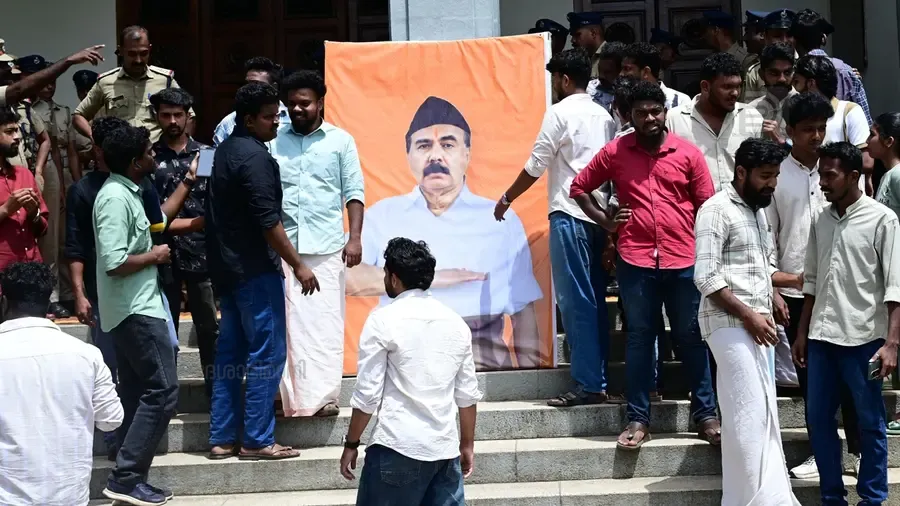
In Kerala, the standoff began when former Governor Arif Mohammed Khan—who also served as the Chancellor of the state’s universities—accused the Left-led state government of bypassing established procedures and interfering with university autonomy. The state, in turn, pushed back, arguing that the Governor was exceeding his constitutional authority and attempting to push the BJP’s agenda—driven by the ideological influence of the Rashtriya Swayamsevak Sangh (RSS)—onto Kerala’s education system.This has led to delays in appointments, legal battles, and uncertainty in several universities.
While this tug-of-war has captured headlines, it reflects a much deeper crisis that is unfolding across India’s higher education landscape.
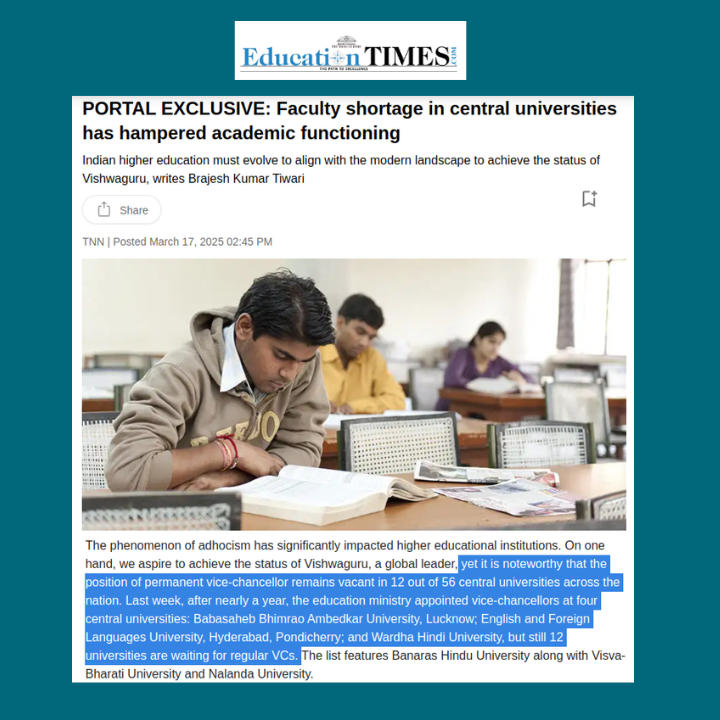
At the national level, several top universities are running without full-time vice-chancellors. "Ten Central Universities—including the prestigious Banaras Hindu University (BHU), which has lacked a full-time Vice-Chancellor for over six months—still do not have permanent Vice-Chancellors, prompting even the Allahabad High Court to issue an order directing the government to fill the post.
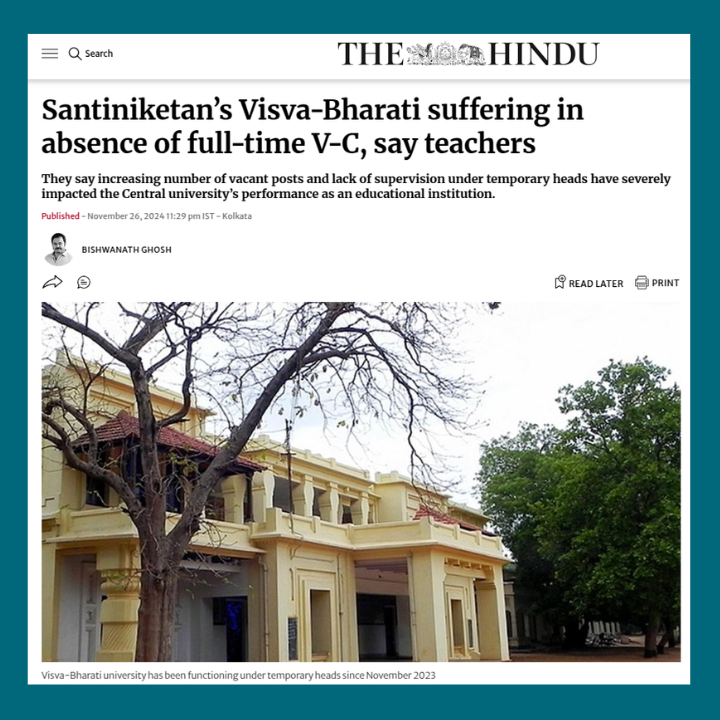
Indira Gandhi National Open University (IGNOU)—the world’s largest open university—has been without a permanent Vice-Chancellor since July 2024. At Visva-Bharati University in West Bengal, teachers have raised alarm over the absence of a permanent VC since November 2023, saying it has left the institution paralysed.
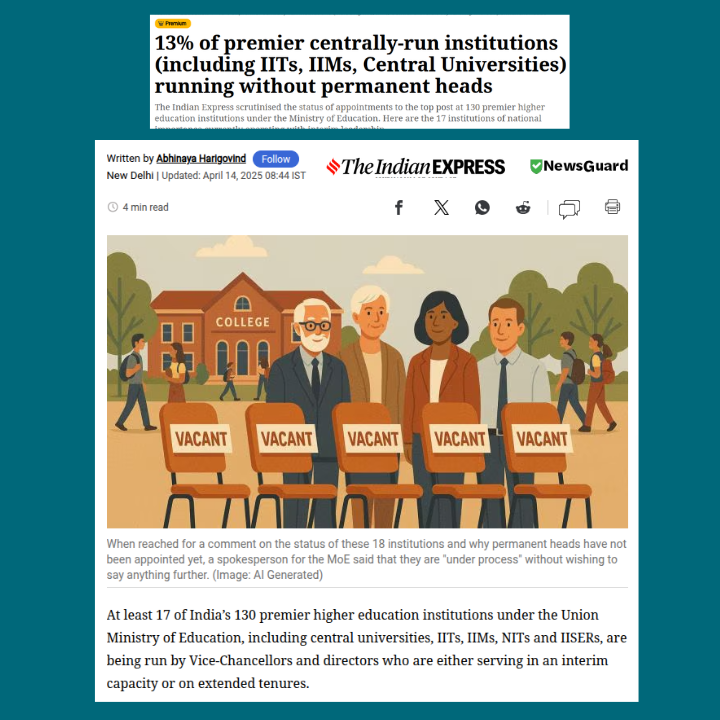
The situation is no better in technical and management institutions. IIT Kharagpur and IIT Hyderabad, along with the National Institutes of Technology (NITs) in Srinagar, Uttarakhand, and Andhra Pradesh, are all being run by interim directors. This has made it difficult for these institutions to plan for the long term or make major decisions. Even premier business schools are affected—Indian Institute of Management (IIM) Calcutta has not had a permanent director for over two years. Similar delays are affecting IIM Shillong and IIM Kashipur. The Telegraph India has criticized the government’s inaction, calling it a sign of "central apathy."
Even the University Grants Commission (UGC), which oversees higher education standards in India, is without a full-time chairperson. The post is being handled on an interim basis by the Secretary of Higher Education, as reported by ThePrint.
The union government often blames these delays on procedural complexities. But several media reports and academic insiders suggest that the real reason may be political. According to an article by The Telegraph, files related to top appointments are often delayed by the Prime Minister’s Office (PMO). Search committees are bypassed, and political commitment is prioritised over academic qualifications.
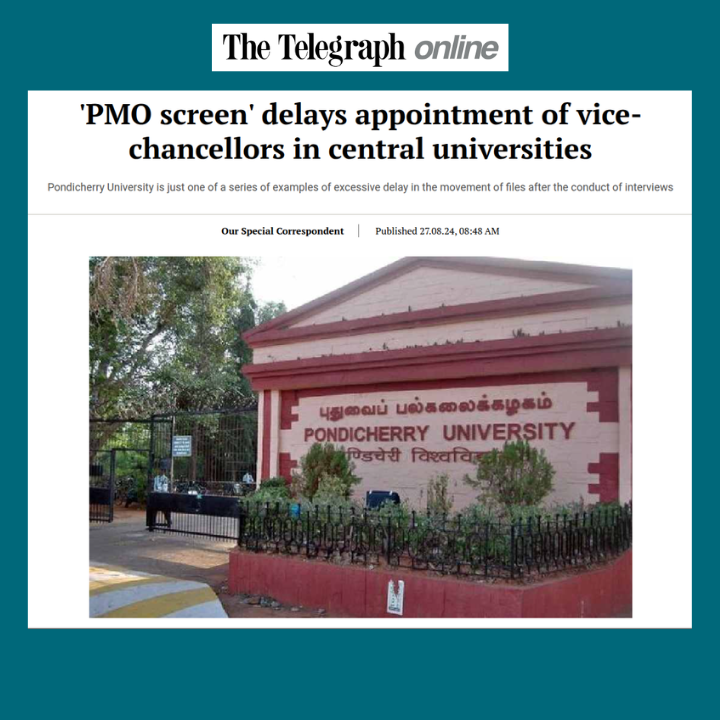
This kind of political interference is having serious consequences. Acting VCs and directors often don’t have the authority to launch new programs or sign partnerships with foreign institutions. Faculty morale takes a hit. Students lose confidence. Decision-making stalls—an environment that benefits a regime more interested in loyalty than in critical thinking.
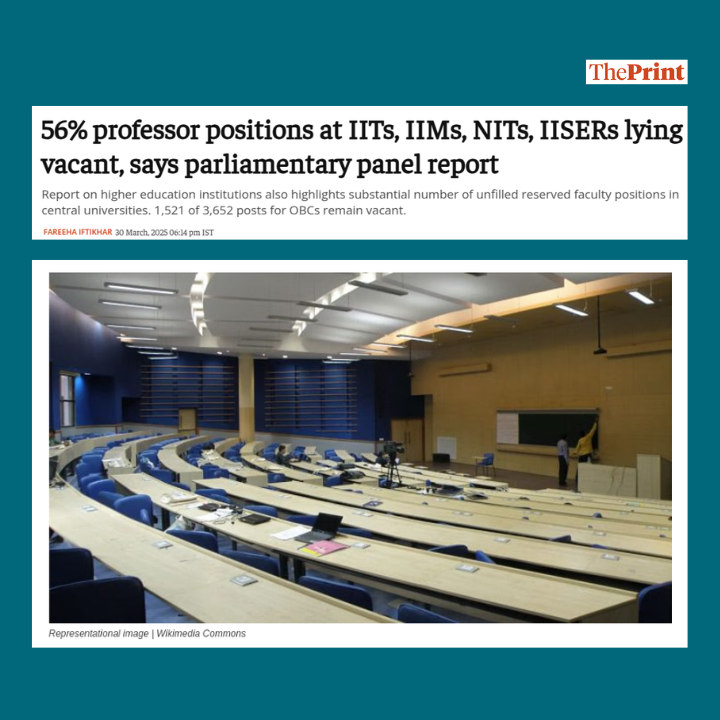
Making matters worse is the growing shortage of teaching staff. A recent parliamentary panel found that more than half—56%—of all professor-level posts across IITs, IIMs, NITs, and central universities are lying vacant. A Right to Information (RTI) request mandated by the UGC showed that central universities have a 27% overall faculty vacancy rate, which jumps to 38% for reserved-category positions. In a 2024 response to the Rajya Sabha, the government admitted that more than 5,100 faculty posts remain unfilled.
This shortage has led to poor student–teacher ratios, reduced research output, and a delay in much-needed reforms. Academic experts say that without permanent heads, universities are stuck in limbo, unable to implement even the basic goals of the National Education Policy (NEP) 2020.
While NEP 2020 promised more autonomy, academic freedom, and global competitiveness, in practice, it has become a tool for tighter government control. For instance, the UGC’s draft rules for 2025 propose making even retired bureaucrats and business leaders eligible for Vice-Chancellor roles. Many educationists see this as a way to sneak in political appointees through the backdoor and further weaken academic independence (ThePrint, June 2025).
But the problems go beyond poor governance—they threaten the very foundation of scientific thinking in India. The BJP and its ideological parent, the RSS, have been accused of eroding what the Constitution calls “scientific temper” (Article 51A(h)). School and college textbooks have been stripped of critical content like evolution, the periodic table, and Enlightenment philosophy. Instead, they now include pseudo-scientific claims about ancient Indian plastic surgery and flying chariots.
Even the Indian Science Congress, once a respected event, has been mocked after hosting speakers who claimed that the Kauravas were test-tube babies and that Ravana had aircraft—sometimes in front of Union ministers. Groups affiliated with the RSS, such as Vidya Bharati, are now playing a growing role in shaping national education policy, favoring mythology and nationalism over science and evidence.
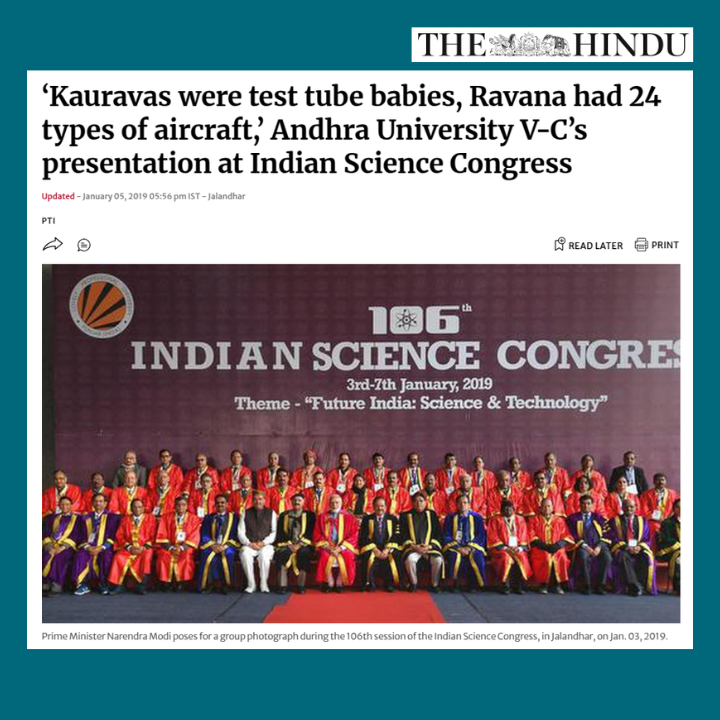
This isn’t cultural pride—it’s anti-intellectualism dressed up as tradition. The result? Research slows down, critical thinking is discouraged, and young Indians are left unprepared for a competitive global economy.
Kerala offers a stark example of this sabotage. The state has a strong track record in education and a high literacy rate. In 2021, it launched the Kerala Knowledge Economy Mission (KKEM) to shift from a remittance-driven economy to one focused on innovation, ups-killing, and digital employment. But the union government has reportedly blocked or delayed several of the state’s proposals, including plans for AI hubs, biotech parks, foreign university collaborations, and research grants. The refusal to approve VC appointments—despite state-level clearance—is just the most visible sign of this resistance.
The BJP-led union government is deliberately using bureaucracy to block Kerala’s development model because it challenges the party’s ideological and economic narrative. The message is clear: states that don’t align politically will not be allowed to flourish intellectually.
The Vice-Chancellor crisis in Kerala is not just a local issue—it’s a powerful symbol of a deeper, nationwide crisis in Indian higher education. Across the country, universities are being run without leadership, critical academic positions remain vacant, and institutions are struggling to function.
What’s emerging is not an education reform but a larger political project to remake Indian academia into an ideological tool. If India is to become a true knowledge society, it must urgently restore academic freedom, make appointments based on merit, and protect the spirit of scientific inquiry.
Otherwise, the intellectual base of the world’s largest democracy will continue to erode—one vacant post, one silenced academic, and one censored textbook at a time.



Related News
Dont Miss it










0 comments