
Kerala
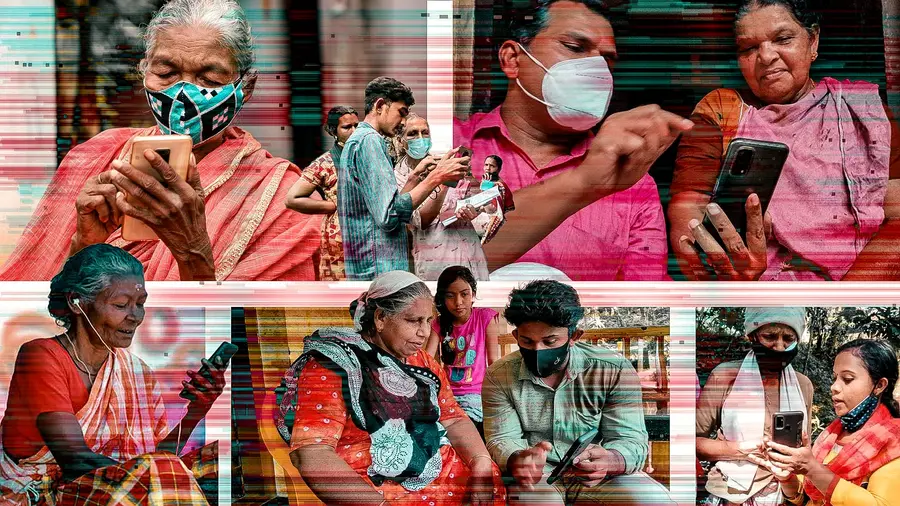
Rebooting Kerala: Liberating Through Digital Literacy

Anusha Paul
Published on May 10, 2025, 02:55 PM | 9 min read
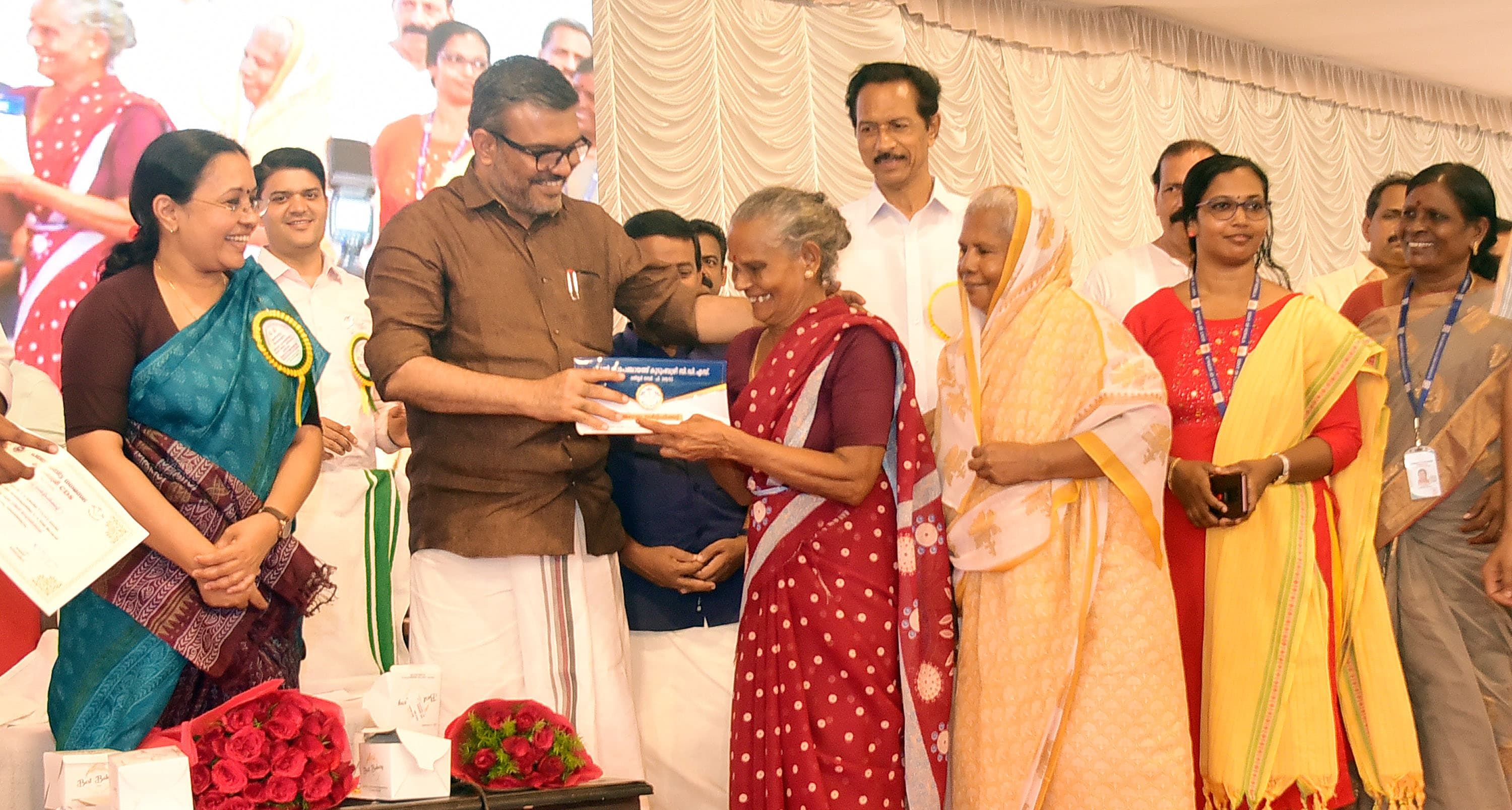
In our earlier article on Kerala’s efforts to eradicate extreme poverty, we talked about Sarasu, a 70-year-old woman from Pullampara village in Thiruvananthapuram district, who is now the brand ambassador of the DIGI Kerala Project. This comes as the project approaches five years since its launch.
Sarasu lost both her husband and son, leaving her alone and struggling to make ends meet. The local grama panchayat identified her as a case of extreme poverty, and she was provided with essential support: a renovated house, a social security pension, and regular employment under the Mahatma Gandhi National Rural Employment Guarantee Act (MGNREGA) scheme, all part of the State Government’s Extreme Poverty Eradication Project. While this support helped address her immediate needs, it soon became evident that Sarasu, like many others in similar situations, needed more than just material assistance.
(Image: Special Arrangement)
She needed an opportunity to reconnect with her community, to feel included, and to regain a sense of purpose. Therefore, she was introduced to Digi Keralam, a state-led initiative aiming to ensure digital literacy for all citizens. When the program was first introduced in Pullampara, Sarasu was hesitant to join the class.
“Initially, Sarasu was hesitant,” recalls Rajesh, President of Pullampara Grama Panchayat. “But our volunteers kept encouraging her. She quickly picked up how to use a smartphone, and within weeks, she was adept at understanding the phone’s inbuilt capacities and using social media on her own.”
With money saved from her pension and MGNREGA work, she eventually bought herself a phone. When Sarasu broke her phone while at work, she became visibly withdrawn. “Volunteers noticed this and we bought her a new phone,” says Rajesh. With time, Sarasu not only became comfortable with digital tools but also gained the confidence to share her interests with the wider world. Alongside her continued work under the scheme, she began exploring her passion for music and is now preparing to launch her own YouTube channel, Sarasuvinte Lokam (Sarasu’s World), where she plans to share local folk songs.
The urgency of digital literacy was especially felt during the COVID-19 lockdown, when many government services moved online. The Government was about to launch the Integrated Local Governance Management System (ILGMS), a digital platform designed to make panchayat-level public services more accessible.
“Everything is connected with the computer and internet now. But the rural population does not have the necessary skills to get a birth certificate online or pay tax, not even to book a gas cylinder,” says Rajesh.
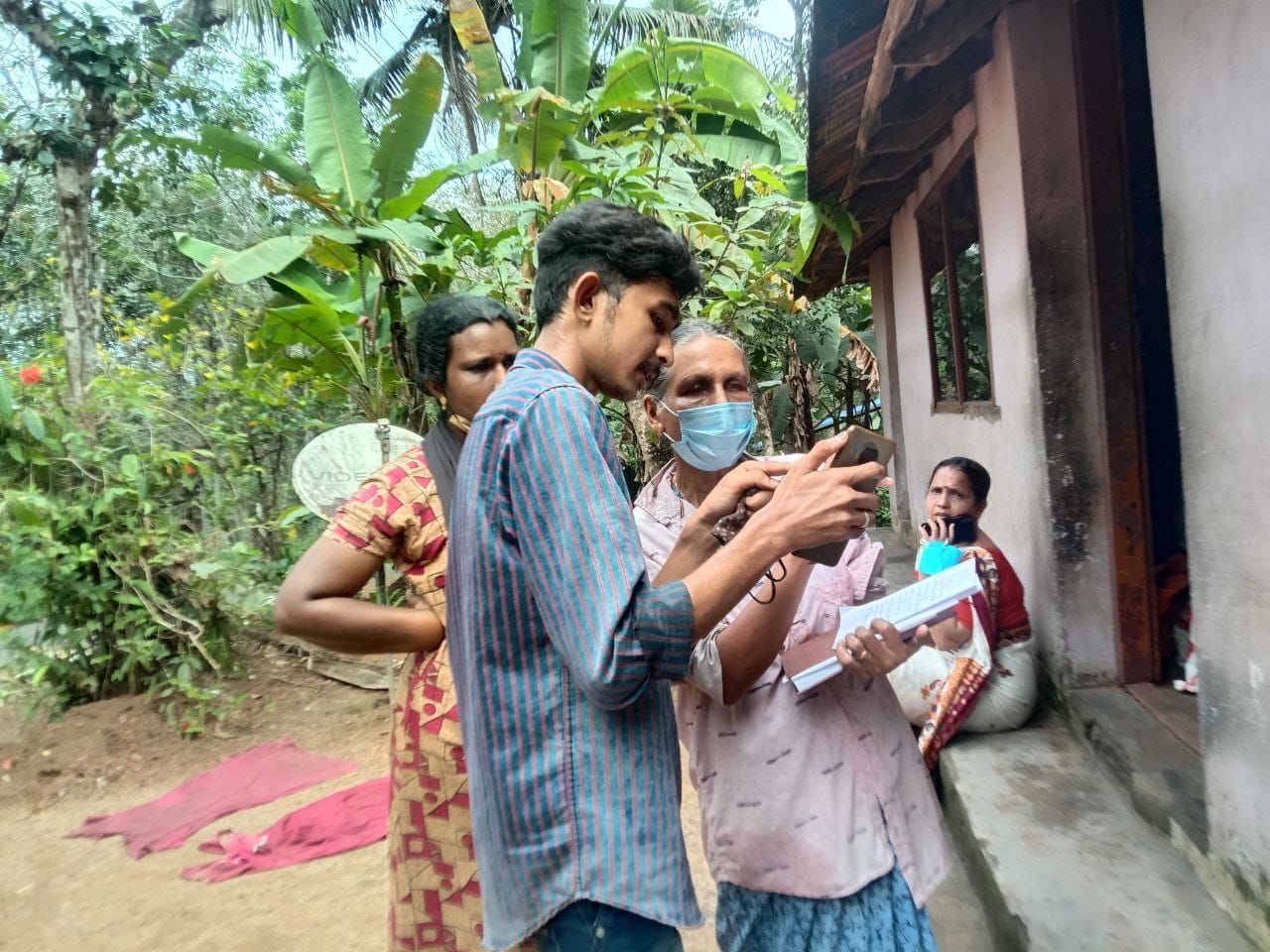
To bridge this gap, the Pullampara panchayat collaborated with APJ Abdul Kalam Technological University to develop a simplified digital literacy module, suitable for people across age groups, especially the elderly. The Kerala Institute of Local Administration (KILA) was responsible for overseeing the training process. Supporting this effort was a dedicated mobile application developed by Pan Environ, a start-up focused on civic technology solutions. The initiative was powered by an expansive volunteer network.
(Image: Special Arrangement)
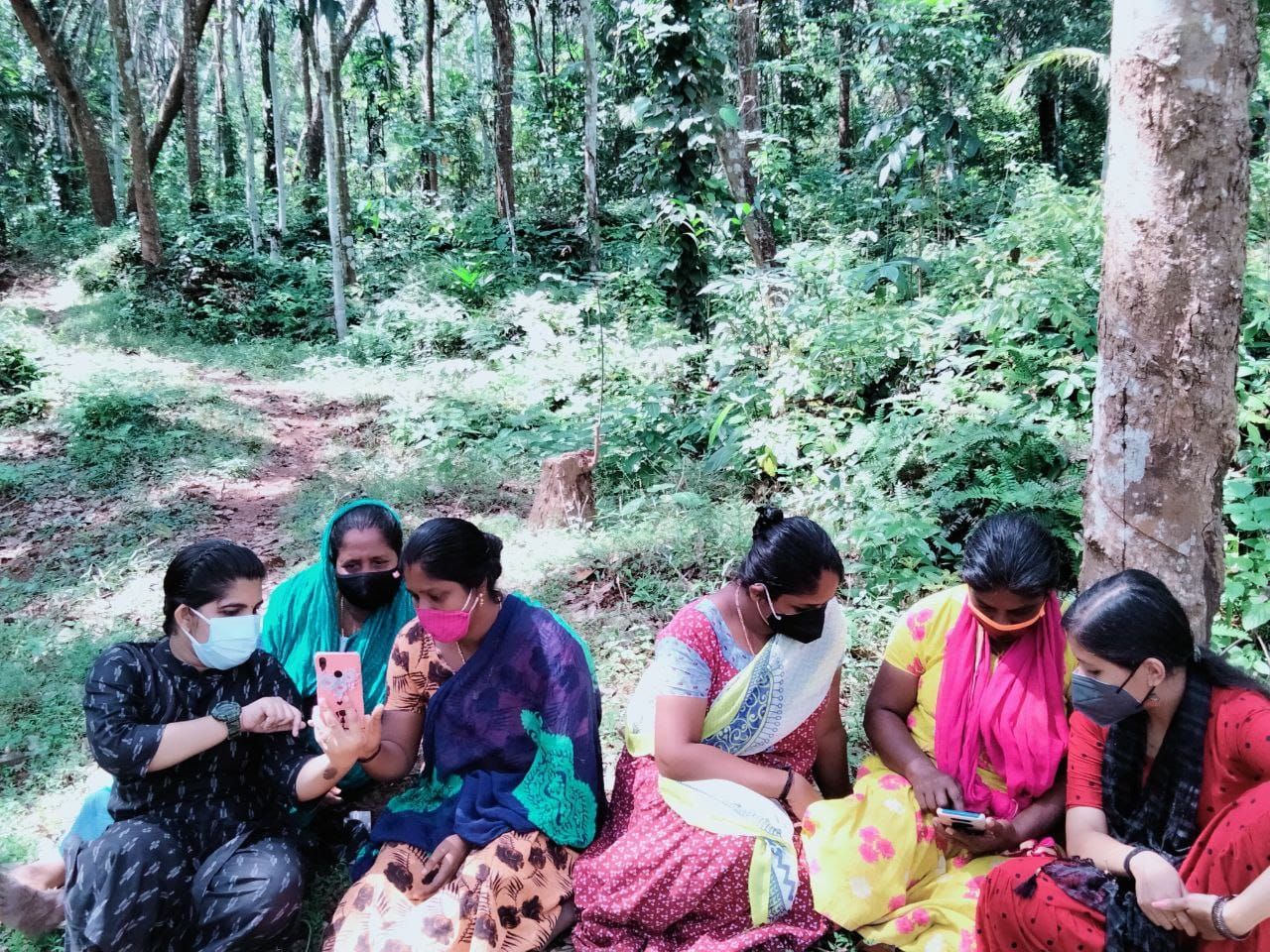
Volunteer training sessions were conducted on a ward-by-ward basis, typically lasting four to seven days. The project’s leadership team included the Panchayat President, Project Coordinator, MGNREGA District Engineer, and the District Women and Child Development Officer. The training model allocated one volunteer for every 20 people. Volunteers came from various groups including National Service Scheme (NSS) cadets, Kudumbashree members, Youth Commission volunteers, student and youth organisations, and local volunteers.
After undergoing training to conduct household surveys using scientifically designed modules, volunteers carried out surveys across Pullampara. According to the 2011 census, the village had a population of 22,452, with 11,722 women and 10,730 men. A total of 22,173 people were surveyed by 250 NSS cadets from engineering colleges and higher secondary schools. A total of 3,300 learners attended the digital literacy training classes, with an impressive 96.18% (3,174) successfully completing the program.
Notably, women formed the majority of successful learners—of the 2,494 women who attended, 2,398 completed the training, while among men, 776 out of 806 succeeded. After completing the training, learners were assessed. Those who failed were given additional training and reassessed. The project mandated participation from everyone aged between 14 and 65.
“The university had composed a very easy and comprehensive study module. Even elderly participants, some who had never even used a keypad phone, were able to learn smartphone basics, explore the internet, and stay connected. We even had learners aged 90,” said Rajesh.
The initial budget of rupees 4 lakh was collected by the panchayat, with additional funds raised through Corporate Social Responsibility (CSR) contributions from private companies. One of the major logistical challenges was the village’s 25.9 sq. km hilly terrain, which lacked mobile network coverage in five wards. This issue was resolved by involving the sitting MLA D Murali and Rajya Sabha MP John Brittas, who facilitated meetings with telecom providers and the district collector to install a mobile tower.
The project’s success was officially declared on April 18, 2022, when Chief Minister Pinarayi Vijayan announced Pullampara as the first fully digitally literate grama panchayat in Kerala. He also declared that the same model would be replicated across the state to make Kerala fully digitally literate.
Table - 1
Sl no | District | Total Number of LSGIs | Total Number of Wards | Total Number of Households | Number of Families surveyed | Total Number of Padithakkal Identified | Padithakkal Completed Training | Evaluation Passed Padithakkal |
1 | Alappuzha | 78 | 1384 | 525036 | 525036 | 169043 | 168980 | 168979 |
2 | Ernakulam | 96 | 1833 | 836679 | 836679 | 195658 | 195654 | 195654 |
3 | Idukki | 54 | 861 | 260661 | 260661 | 91089 | 91089 | 91068 |
4 | Kannur | 81 | 1545 | 588269 | 588269 | 170922 | 170919 | 170919 |
5 | Kasaragod | 41 | 777 | 322056 | 322056 | 63914 | 63914 | 63914 |
6 | Kollam | 73 | 1420 | 655792 | 655792 | 175457 | 175457 | 175457 |
7 | Kottayam | 77 | 1344 | 466225 | 466225 | 72355 | 72355 | 72355 |
8 | Kozhikode | 78 | 1566 | 735721 | 735721 | 200444 | 200443 | 200443 |
9 | Malappuram | 106 | 2257 | 1038704 | 1038704 | 241113 | 240779 | 240510 |
10 | Palakkad | 95 | 1730 | 726457 | 726457 | 214971 | 214970 | 214969 |
11 | Pathanamthitta | 57 | 920 | 339665 | 339665 | 98044 | 98038 | 98038 |
12 | Thiruvananthapuram | 78 | 1546 | 748619 | 748619 | 187416 | 187399 | 187392 |
13 | Thrissur | 94 | 1794 | 881861 | 881861 | 230769 | 230766 | 230766 |
14 | Wayanad | 26 | 512 | 220134 | 220134 | 77203 | 77203 | 77203 |
Total | 1034 | 19489 | 8345879 | 8345879 | 2188398 | 2187966 | 2187667 | |
“Achieving digital literacy needed more than just training,” said Rajesh. “It took infrastructure, planning, local leadership, and most importantly, the poverty eradication project, which brought the willingness among people like Sarasu to learn something new by freeing them from the cycle of miseries.”
The success in Pullampara laid the foundation for a much larger initiative—Digi Kerala, a state-wide campaign. As of March 15, 2025, the program had surveyed over 1.5 crore individuals through 2,27,000 volunteers who reached over 83 lakh families. Among the 21.88 lakh people identified as learners, 99.98% (21.87 lakh) completed the training and successfully passed the assessment. This group included over 16.6 lakh individuals between the ages of 14 and 65, and more than 15,000 citizens aged 90 or older, according to a report by the Kerala Local Self Government Department.
To ensure the program's quality, a district-level "Super Check" was conducted under the leadership of the District Joint Director. Any local body where more than 10% of participants failed the check was required to conduct retraining. A third-party evaluation by the Economic and Statistical Department further ensured transparency. In areas where progress lagged, urgent measures were taken to complete the process.
“What makes us different from the National Digital Literacy Mission is that they have an age category of 14 to 60 and require only one person per family to be trained. Here in Kerala, our commitment is to become an entirely digital state. We set the age bar at 14 to 65, and even individuals above 60 are encouraged to learn and join,” says Sajina Sathar, Team Leader of Digi Kerala.
The syllabus developed by the Technological University is both comprehensive and easy to follow. The program follows a phase-wise module structure. The first phase includes three modules with five activities each, focusing on basics such as turning the phone on and off, creating WhatsApp and Facebook IDs, making calls, capturing photos and videos, sending and receiving messages, and booking a gas cylinder.
In the upcoming second phase, learners will be introduced to using the KSmart mobile application, with the goal of ensuring that at least one account per family is created. This phase will enable access to the entire range of services offered by the Local Self Government Department, including applying for birth certificates, paying taxes, and more.
“We are yet to develop Phase 3,” says Sajina Sathar. “Our aim is to move toward enabling digital learning, but that will require a far more expansive understanding of not just technology access, but also educational content delivery, user readiness, and ongoing support.”
While the current phases focus on functional digital literacy and access to government services, the next leap would involve equipping citizens to use digital platforms for learning, skill-building, and possibly even earning.
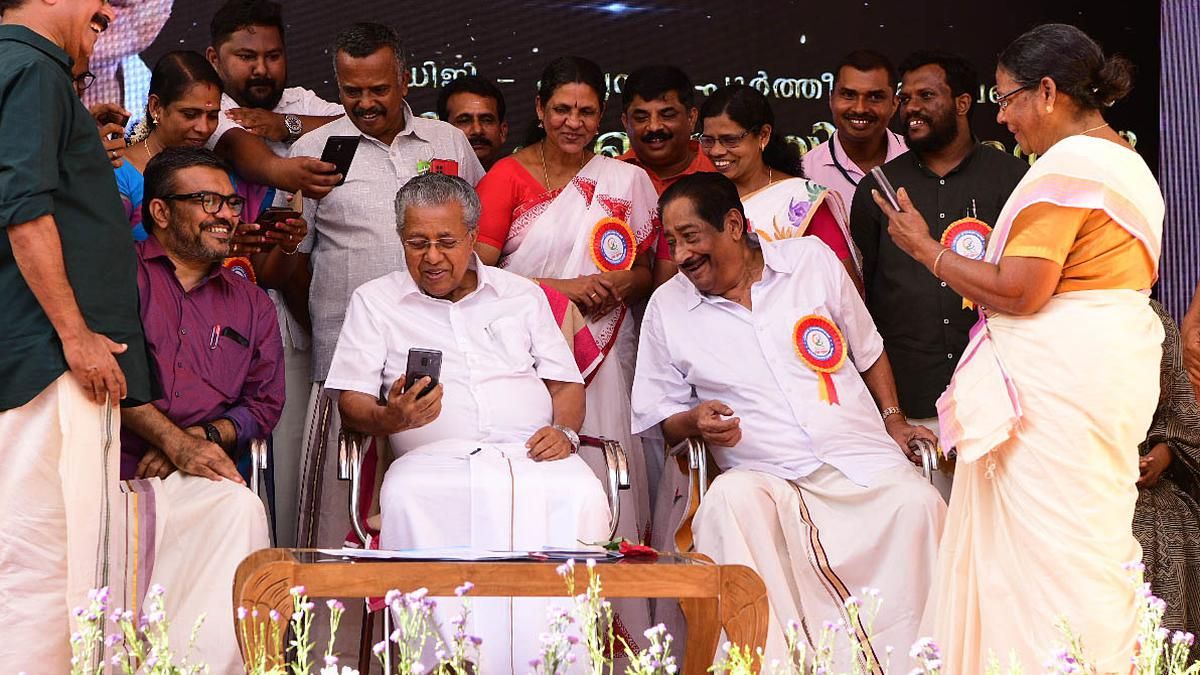
(Image courtesy: The Hindu)
The culmination of the DIGI Pullampara project was marked by a moment that captured its essence—when Shantha, an MGNREGA worker, spoke directly to Chief Minister Pinarayi Vijayan over a video call. For someone who had never used a smartphone before this initiative, the interaction was a quiet but powerful affirmation of the project's impact. Alongside her, people like Sudarshan, who had studied only up to sixth standard, also completed the training with confidence.
These moments are not exceptions but outcomes of a model that combined grassroots mobilisation, inclusive pedagogy, and institutional coordination. As DIGI Kerala moves into its next phases, these examples reaffirm the state’s commitment to ensuring that no citizen is left behind in the digital transformation—irrespective of age, background, or geography. As the LDF’s slogan during its first term aptly put it, “Food, Clothing, Shelter and Internet”—this will be the next frontier in the fight for equitable development.



Related News
Dont Miss it






0 comments